Hey there! I’m a supplier of cobots, those super – cool collaborative robots that are changing the game in factories all over the place. Today, I wanna chat about how cobots interact with other equipment in a factory. Cobot
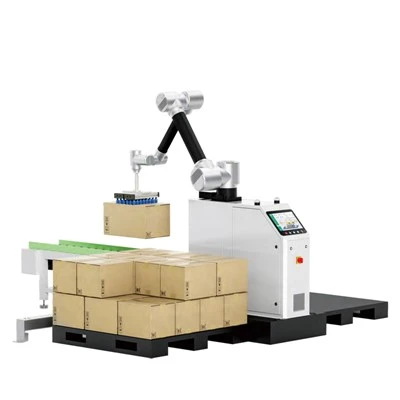
As a cobot supplier, I’ve seen firsthand the amazing things that happen when these robots team up with other machinery on the factory floor. The big question is, how exactly do they make this teamwork work?
First off, let’s talk about communication protocols. Cobots use a variety of ways to communicate with other equipment. One of the most common methods is through Industrial Ethernet. It’s like a high – speed data highway in the factory. With Industrial Ethernet, cobots can quickly exchange information with things like conveyor belts, CNC machines, and other automated systems. For example, a cobot working on a packaging line needs to know when a new product is coming down the conveyor. Through Industrial Ethernet, it can receive real – time data about the speed and position of the conveyor, so it can pick up the product at the right time.
Another way cobots communicate is via fieldbus systems. These are like local communication networks. Fieldbus systems are great for connecting cobots to sensors and actuators. Sensors can tell the cobot about the environment, like if there’s an object too close or if the temperature is getting too high. And actuators, well, they’re the ones that make things happen, like opening a valve or moving a mechanical arm. The cobot can send commands to the actuators through the fieldbus to get the job done.
Now, let’s move on to coordination. When cobots work with other equipment, they need to be well – coordinated. Take a welding operation, for instance. A cobot might be responsible for holding the welding gun, while a robotic arm moves the workpiece into position. These two pieces of equipment need to work in harmony. They use pre – programmed sequences that are synchronized. Before the cobot starts welding, it knows exactly when the workpiece will be in the right position. This kind of coordination is crucial for ensuring high – quality work and preventing accidents.
In some cases, cobots can even adjust their behavior based on what other equipment is doing. Let’s say there’s a vision system in the factory that’s used to inspect products. If the vision system detects a defect in a product, it can send a signal to the cobot. The cobot can then decide whether to re – work the product, move it to a reject bin, or perform some other action. This kind of flexibility is what makes cobots so valuable in a factory setting.
Safety is also a huge factor when it comes to cobot interaction with other equipment. Cobots are designed to work safely alongside humans, but they also need to be able to work safely with other machinery. One way they do this is through built – in safety features. For example, cobots are equipped with force – sensing technology. If they come into contact with another piece of equipment with too much force, they can stop immediately. This helps prevent damage to both the cobot and the other equipment.
There are also safety interlocks. These are like electronic locks that prevent certain actions from happening unless specific conditions are met. For example, a cobot might be programmed not to start moving until a safety gate around a nearby machine is closed. This ensures that workers are safe and that the equipment doesn’t interfere with each other.
Now, let’s talk about the benefits of cobots interacting with other equipment. First of all, it increases productivity. When cobots work together with other machines, they can perform tasks much faster than if they were working alone. For example, in a pick – and – place operation, a cobot can work with a high – speed conveyor to quickly move products from one place to another. This means more products can be produced in less time.
Secondly, it improves quality. The precise coordination between cobots and other equipment ensures that each task is performed accurately. In a manufacturing process, even a small error can lead to a defective product. By working together, cobots and other machines can reduce the margin of error and improve the overall quality of the products.
Another benefit is cost – savings. Cobots are generally more affordable than traditional industrial robots. And when they interact with other existing equipment in the factory, there’s no need to replace a lot of the machinery. This means factories can upgrade their production processes without spending a fortune.
But it’s not all sunshine and rainbows. There are some challenges when it comes to cobot interaction with other equipment. One of the biggest challenges is compatibility. Different pieces of equipment might use different communication protocols or have different programming languages. This can make it difficult for the cobot to communicate and work effectively with other machines.
Another challenge is integration. Integrating a cobot into an existing factory setup can be a complex process. It requires careful planning and testing to ensure that the cobot works well with other equipment. There might be issues with physical space, power requirements, or even software compatibility.
As a cobot supplier, I’m here to help factories overcome these challenges. We have a team of experts who can work with you to figure out the best way to integrate your cobot with your existing equipment. We can help with everything from choosing the right communication protocol to programming the cobot to work in harmony with your other machines.
If you’re a factory owner or someone involved in factory operations and you think cobots could be a great addition to your setup, I’d love to have a chat with you. We can discuss how our cobots can interact with your existing equipment, what kind of benefits you can expect, and how we can make the integration process as smooth as possible. Don’t hesitate to reach out for a procurement discussion. We’re ready to bring the power of cobots to your factory and help you take your production to the next level.
Industrial Robot References:
- International Organization for Standardization (ISO). ISO 10218 – 1:2011. Robots and robotic devices — Safety requirements for industrial robots — Part 1: Robots.
- Robotics Industries Association (RIA). Technical standards for collaborative robots.
- Industry publications on industrial automation and robotics.
Robotic Technology (GD) Co., Ltd.
Robotic Technology (GD) Co., Ltd. is one of the most experienced cobot manufacturers and suppliers in China, also supports custom service and one year warranty. Please feel free to wholesale CE approved cobot for sale here from our factory. Contact us for quotation.
Address: Room 102, No. 30,Hengfeng 2nd Road,Daguo, Changping Town, Dongguan City,Guangdong,China
E-mail: admin@iroboticplus.com
WebSite: https://www.rb-tic.com/
