If you’ve ever walked through a construction zone at dusk, navigated a flooded street after a heavy rain, or approached a worksite where workers are doing overhead repairs, you’ve probably seen Warning Net—tough, bright green mesh stretched between steel posts, tucked under scaffolding, or strung across a busy sidewalk. To most people, it looks like just another roll of plastic mesh, a barrier to keep debris from landing on passersby. But after 12 years as a supplier of Warning Net, I can tell you there’s a lot more going on under that woven fabric than meets the eye. It’s not just a safety accessory; it’s a system engineered to work in three key layers: physical containment, visibility, and data integration, all designed to turn “could-be dangerous” into “completely protected.” Warning Net
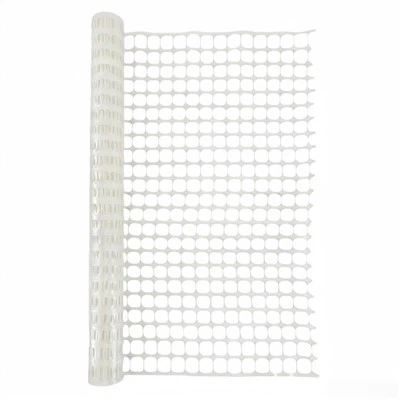
Let’s start with the part that makes Warning Net different from a random piece of mesh or tarp: the physical core. Early on, when we first started selling Warning Net back in 2011, we used basic polyester, but it kept breaking when a 2×4 fell from 20 feet up, or when wind whipped it against sharp rebar. We tested 17 different materials before landing on a high-density polyethylene (HDPE) blend that we still tweak today. This isn’t the flimsy plastic you see in grocery store bags; it’s a resin that’s melted, extruded into thin strands, and woven in a tight, uniform grid. The openings are only 2 inches by 2 inches—small enough that even a 1-pound tool can’t slip through, but big enough that rain, wind, and light don’t get trapped, which would make the net sag or tear under weight.
We also add a UV stabilizer to every batch of HDPE. That’s a big deal because most safety gear degrades fast in sunlight; a net left out for a month might become brittle and crack. Our stabilizer lets it hold up for up to three years of outdoor use, even in desert heat or coastal salt air. When a user installs Warning Net, they attach it to steel frames every 6 feet, and tension it so it’s slightly concave—like a trampoline, but not springy. That curve does two things: first, it catches debris mid-fall, instead of letting it bounce over the edge, and second, it distributes the force of a falling object across a larger area of the net, so no single strand takes the full impact. Last year, we had a construction company in Chicago test this on a 30-story office renovation; they reported that over 8 months of work, the net caught 27 tools, 14 bags of drywall, and even a section of scaffolding board, and only one small strand needed patching. That’s the kind of performance we built the business on.
Next, visibility. Safety works only if people can see the warning, and that’s where Warning Net’s color and markings come in. Early users often asked for “clear” net, but clear would blend into the background—workers on a scaffold won’t notice a clear net, and drivers won’t see it across a street. We landed on a bright, fluorescent lime green, which OSHA actually recommends for temporary safety barriers because it’s visible in low light, fog, and even from a distance of 500 feet. We also weave 2-inch red reflective strips every 10 feet along the top and bottom edges. Those strips use prismatic retroreflective technology, the same kind used on road signs—they bounce light from car headlights or work trucks straight back to the source, so even at night, the net stands out instead of disappearing into the dark.
I still remember a story from a customer in Houston a few years ago. They were doing street repairs on a corner that got really busy after school, and they tried a cheaper, non-reflective net first. One evening, a teen on a bike didn’t see the net and rode right into it; they fell, but only got a cut on their arm. They switched to our reflective Warning Net the next day, and for the rest of the project, we didn’t get a single near-miss from vehicles or pedestrians not noticing the barrier. Visibility isn’t just a nice touch—it’s a critical part of the net’s job, because even the strongest physical barrier is useless if people don’t know it’s there.
The third layer, and the one that makes modern Warning Net different from the versions sold 15 years ago, is data integration. A lot of people don’t realize that our nets aren’t just passive barriers—they can track their own condition, and even alert teams when something’s wrong. We added small, rugged sensors to the net’s frames starting in 2018. These sensors measure tension, UV exposure, and even impact. If a heavy object hits the net hard enough, the sensor sends a text or email to the site manager, alerting them to check that section. That’s a big upgrade from the old days, when managers had to walk the worksite every day to inspect the net, which meant missing damage that happened overnight or on weekends.
The sensors also track how long the net has been exposed to UV light. If a section is coming up on its three-year lifespan, it sends a reminder to replace it, so you don’t end up with a degraded net that could tear when you need it. We work with 120+ construction companies across North America, and most of them use the sensor data to build better safety routines. For example, a contractor in Toronto told us last year that they reduced their net inspection time by 40% because the sensors only alert them to problems, instead of having to check every inch every week. It’s not about replacing human safety managers—it’s about giving them the tools to work smarter, not harder.
Of course, like any safety product, Warning Net doesn’t work in a vacuum. I’ve seen too many times where a company buys a cheap, low-quality net, stretches it too loose, or puts it up without checking the edges, and then wonder why it fails. The best way to make sure your Warning Net works is to follow a few simple installation steps. First, measure the area you need to cover—our nets come in standard sizes, but we also make custom cuts for awkward spaces, like around curved balconies or under bridge overhangs. Second, use the right frame: steel is non-negotiable for worksites, because plastic frames will bend under tension. Third, make sure the net is tight, not sagging—if there’s more than 2 inches of slack, debris can roll over the edge. And finally, check the net after big wind events or heavy rain, because even the best net can get damaged by a falling branch or a gust of wind.
When I started this business, I wanted to sell a product that actually solved a problem, not just checked a box for OSHA requirements. That’s why we test every batch of HDPE at our in-house lab—we drop 20-pound weights from 30 feet to make sure the net can take repeated impacts, and we expose samples to UV lights for 1,000 hours to make sure they don’t degrade. We also work with a team of safety engineers, who help us tweak the design based on feedback from site managers. Last year, a foreman in Seattle told us that the top edges of the net would get tangled in tree branches, so we added a reinforced, smooth top edge that slips over branches easily. That’s the kind of detail you only get by talking to the people who use the net every day, not just designing it in an office.
If you’re a worksite manager, a construction foreman, or a facilities coordinator looking for a safety solution that actually delivers on its promise, our team is here to walk you through what you need. We don’t push one-size-fits-all solutions—whether you need a small net for a residential roof repair, or a 1,000-foot custom net for a highway expansion project, we can help you pick the right material, size, and sensor setup for your site. We also offer on-site training for installation, so your team knows exactly how to stretch and secure the net to get the best performance.

If you want to talk through your specific needs, or ask any questions about how Warning Net can work for your next project, feel free to reach out to our team for a procurement consultation. We’re happy to walk you through case studies, show you test results, and make sure you get a product that meets your safety standards and budget.
Plastic Square Mesh References
Occupational Safety and Health Administration. (2022). Temporary Fall Protection and Barriers for Construction. U.S. Department of Labor.
National Institute for Occupational Safety and Health. (2021). Debris Containment Systems for High-Rise Construction. NIOSH Publication.
American Society of Safety Professionals. (2020). Visibility Standards for Temporary Safety Barriers. ASP Journal.
Shaoxing Yongte Plastics Co., Ltd.
We are one of the most reliable warning net manufacturers and suppliers in China, specialized in providing high quality customized products. We warmly welcome you to wholesale discount warning net for sale here from our factory. Contact us for pricelist and free sample.
Address: INDUSTRIAL PARK, LIZHU TOWN, KEQIAO DISTRICT, SHAOXING CITY, ZHEJIANG PROVINCE
E-mail: support@sxxyongte.com.cn
WebSite: https://www.fenceplastic.com/
