Surface roughness is a critical factor that significantly influences the subsequent finishing process, especially when it comes to products like Aluminum Oxide Flap Discs. As a supplier of these high – quality flap discs, I’ve witnessed firsthand how surface roughness can either streamline or complicate the finishing operations. In this blog, I’ll delve into the various ways surface roughness impacts the subsequent finishing process and how our Aluminum Oxide Flap Discs can be part of the solution. Aluminum Oxide Flap Disc

Understanding Surface Roughness
Surface roughness refers to the irregularities on the surface of a material. These irregularities can be caused by a variety of factors, such as the manufacturing process, wear and tear, or the nature of the material itself. The measurement of surface roughness is typically done using parameters like Ra (arithmetical mean deviation of the profile), Rz (mean height of the profile irregularities), and others.
In the context of metalworking and finishing, surface roughness plays a crucial role. A rough surface may have peaks and valleys that can affect the adhesion of coatings, the fit of components, and the overall aesthetic appearance of the final product. For example, in automotive manufacturing, a rough surface on engine components can lead to increased friction, reduced efficiency, and premature wear.
Impact on Coating Application
One of the most significant effects of surface roughness on the subsequent finishing process is its impact on coating application. When applying a coating, such as paint or a protective layer, a rough surface can cause several problems.
Firstly, a rough surface has a larger surface area compared to a smooth one. This means that more coating material is required to cover the surface adequately. For our customers who are using Aluminum Oxide Flap Discs to prepare surfaces for coating, this can translate into increased costs. Our flap discs can be used to reduce the surface roughness, thereby minimizing the amount of coating material needed.
Secondly, a rough surface can lead to poor adhesion of the coating. The peaks and valleys on the surface can trap air bubbles or debris, which can prevent the coating from bonding properly to the substrate. This can result in peeling, flaking, or uneven coating thickness. By using our Aluminum Oxide Flap Discs to achieve a smoother surface, we can improve the adhesion of the coating and ensure a more durable finish.
Influence on Assembly and Fit
Surface roughness also affects the assembly and fit of components. In precision engineering, components need to fit together accurately to ensure proper functionality. A rough surface can cause interference between parts, leading to misalignment, increased friction, and potential damage.
For example, in the aerospace industry, where components need to be assembled with high precision, a rough surface on turbine blades or engine parts can lead to performance issues. Our Aluminum Oxide Flap Discs can be used to fine – tune the surface roughness of these components, ensuring a better fit and reducing the risk of mechanical failures.
Aesthetic Considerations
The aesthetic appearance of a product is often as important as its functionality. A rough surface can give a product an unprofessional or low – quality look. In industries such as furniture manufacturing or consumer electronics, a smooth and polished surface is highly desirable.
Our Aluminum Oxide Flap Discs are designed to provide a consistent and smooth finish. They can be used to remove scratches, burrs, and other surface imperfections, leaving behind a clean and aesthetically pleasing surface. Whether it’s a metal frame for a piece of furniture or a casing for a smartphone, our flap discs can help achieve the desired look.
How Aluminum Oxide Flap Discs Can Mitigate the Effects of Surface Roughness
Aluminum Oxide Flap Discs are a versatile tool for addressing surface roughness. The abrasive nature of aluminum oxide allows them to effectively remove material from the surface, reducing the height of the peaks and filling in the valleys.
The flaps on our flap discs are designed to flex and conform to the shape of the workpiece, ensuring an even and consistent finish. This is particularly important when working on complex or curved surfaces. The self – sharpening feature of aluminum oxide also means that the flap discs maintain their cutting performance over time, providing a reliable solution for surface finishing.
Case Studies
Let’s take a look at a couple of real – world examples to illustrate how surface roughness affects the subsequent finishing process and how our Aluminum Oxide Flap Discs can help.
Case 1: Automotive Manufacturing
A car manufacturer was experiencing issues with the paint adhesion on their car bodies. The surface of the metal panels was too rough, causing the paint to peel off in some areas. After using our Aluminum Oxide Flap Discs to sand the surfaces, the roughness was reduced, and the paint adhesion improved significantly. This not only enhanced the appearance of the cars but also increased their durability.
Case 2: Machine Tool Manufacturing
A machine tool manufacturer was having problems with the fit of their components. The rough surfaces of the parts were causing interference during assembly, leading to longer assembly times and higher rejection rates. By using our Aluminum Oxide Flap Discs to finish the surfaces, the components fit together more precisely, reducing assembly time and improving the overall quality of the machine tools.
Choosing the Right Aluminum Oxide Flap Disc
When it comes to choosing the right Aluminum Oxide Flap Disc for your specific application, there are several factors to consider.
Grit Size
The grit size of the flap disc determines the coarseness of the abrasive. A lower grit size (e.g., 36 or 60) is suitable for removing large amounts of material and reducing significant surface roughness. A higher grit size (e.g., 120 or 220) is better for fine finishing and achieving a smoother surface.
Backing Material
The backing material of the flap disc affects its flexibility and durability. Paper backing is more flexible and is suitable for working on curved surfaces, while cloth backing is more durable and can withstand higher pressures.
Flap Configuration
The configuration of the flaps, such as the number of flaps and their arrangement, can also impact the performance of the flap disc. A higher number of flaps generally provides a more consistent finish.
Conclusion
In conclusion, surface roughness has a profound impact on the subsequent finishing process. It affects coating application, assembly and fit, and the aesthetic appearance of the final product. As a supplier of Aluminum Oxide Flap Discs, we understand the importance of addressing surface roughness to ensure high – quality finishing.
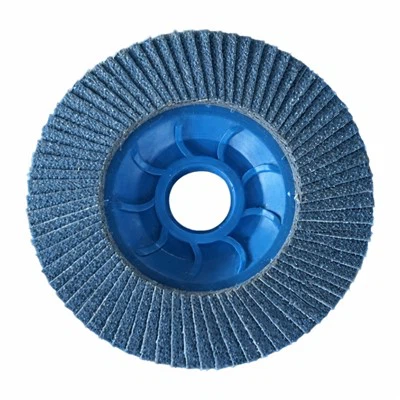
Our Aluminum Oxide Flap Discs are designed to provide a reliable and efficient solution for reducing surface roughness. Whether you’re in the automotive, aerospace, furniture, or any other industry that requires surface finishing, our flap discs can help you achieve the desired results.
Aluminum Oxide Flap Disc If you’re interested in learning more about our Aluminum Oxide Flap Discs or have specific requirements for your surface finishing needs, we’d love to hear from you. Contact us to start a discussion about how our products can meet your requirements and improve your finishing processes.
References
- ASTM International. (20XX). Standard practices for surface texture (roughness, waviness, and lay).
- ISO Standards. (20XX). Geometrical product specifications (GPS) – Surface texture: Profile method.
- Metal Finishing Handbook. (20XX). McGraw – Hill.
Henan Yandisc Hardware Tools Co., Ltd.
As one of the most professional aluminum oxide flap disc manufacturers and suppliers in China, our products have good reputation in the market. Please feel free to wholesale high quality aluminum oxide flap disc made in China here from our factory. Customized orders are welcome.
Address: Zinan Road, High-tech Industrial Development Zone, Zhengzhou, Henan, China
E-mail: info@yandisc.com
WebSite: https://www.yandisc.com/
