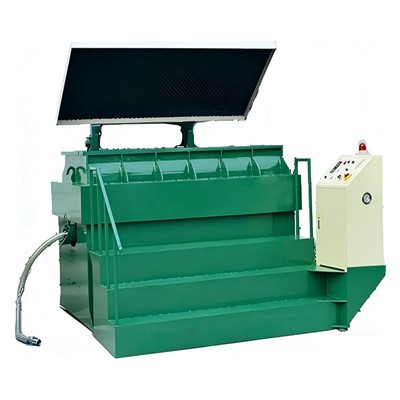
As a provider of Grinding Parts Separators, I often encounter inquiries from customers about the separator’s ability to handle parts of different sizes. This is a crucial question, as many industrial applications involve a mix of variously sized components that need to be sorted or separated during the grinding process. In this blog, I’ll delve into the technical capabilities of our Grinding Parts Separators and explain how they can effectively deal with parts of different sizes. Grinding Parts Separator
The Working Principle of Grinding Parts Separators
Before discussing the separator’s performance on different – sized parts, it’s essential to understand its basic working principle. Our Grinding Parts Separators are designed based on a combination of physical and mechanical separation techniques. The core mechanism typically involves the use of sieving, vibration, and airflow.
Sieving is the most fundamental method. The separator is equipped with screens of specific mesh sizes. When the mixed parts are fed into the machine, the smaller parts will pass through the mesh, while the larger ones are retained on the screen. This simple yet effective process forms the basis of size – based separation.
Vibration is another key factor. By applying controlled vibrations to the sieving mechanism, the parts are agitated, which helps to prevent clogging of the screen and ensures a more efficient separation process. The vibrations also assist in guiding the parts towards the appropriate outlets, depending on their size.
Airflow can be incorporated in some advanced models. The airflow can be adjusted to lift and carry lighter and smaller parts, separating them from heavier and larger ones. This additional feature enhances the precision of the separation, especially for parts with significant differences in size and weight.
Handling Parts of Different Sizes
One of the primary advantages of our Grinding Parts Separators is their versatility in handling parts of various sizes. The design of the sieving system allows for easy customization. We offer a range of screen mesh sizes that can be selected according to the specific requirements of the customer. Whether you are dealing with tiny components in the electronics industry or larger parts in the automotive or machinery sectors, our separators can be tailored to meet your needs.
For example, in the case of separating small metal shavings from larger grinding debris, a fine – mesh screen can be installed in the separator. The small shavings will pass through the screen, while the larger debris remains on top. On the other hand, if you are working with a mix of medium – sized and large – sized plastic parts, a coarser mesh can be used to separate them effectively.
The vibration system also plays a vital role in handling different – sized parts. The intensity and frequency of the vibrations can be adjusted. For smaller parts, a lower – intensity vibration may be sufficient to keep them moving through the screen without causing excessive agitation. In contrast, larger parts may require a higher – intensity vibration to ensure proper movement and separation.
The airflow – based separation feature further enhances the separator’s ability to handle different – sized parts. When dealing with a mix of light, small parts and heavy, large ones, the airflow can be adjusted to lift and direct the small parts to a separate collection area. This is particularly useful in industries where parts have a wide range of densities, as it allows for a more accurate separation.
Real – World Applications
To better illustrate the effectiveness of our Grinding Parts Separators in handling different – sized parts, let’s look at some real – world applications.
In the aerospace industry, precision is of utmost importance. During the grinding process of aerospace components, there are often different – sized particles and chips generated. Our Grinding Parts Separators can be used to separate these particles based on size, ensuring that the final product is free from any unwanted debris. The small particles can be recycled or disposed of appropriately, while the larger chips can be further processed or reused depending on their quality.
In the jewelry – making industry, there are various parts of different sizes used, such as beads, clasps, and small decorative elements. Our separators can be used to separate these parts during the finishing process. This not only improves the efficiency of the production line but also ensures the quality of the final jewelry products by removing any mis – sized or unwanted parts.
In the food industry, especially in the production of snacks or processed foods, there may be a need to separate different – sized food particles. Our Grinding Parts Separators can be designed to meet the strict hygiene standards of the food industry. They can separate larger pieces of food from smaller crumbs, ensuring a more uniform product quality.
Factors Affecting Separation Efficiency
While our Grinding Parts Separators are highly effective in separating parts of different sizes, there are several factors that can affect their separation efficiency.
The shape of the parts is an important consideration. Irregularly shaped parts may be more difficult to separate than those with regular shapes. For example, parts with long, thin shapes or parts with protrusions may get caught in the screen or interfere with the separation process. In such cases, additional pre – processing steps or adjustments to the separator’s settings may be required.
The material properties of the parts also play a role. Parts made of different materials may have different densities, surface textures, and static electricity properties. These differences can affect how the parts interact with the sieving mechanism and airflow. For example, parts with a high static charge may stick together or to the screen, reducing the separation efficiency. To address this issue, we can incorporate anti – static devices or adjusting the humidity in the separation environment.
The feed rate of the parts is another crucial factor. If the feed rate is too high, the separator may become overloaded, leading to incomplete separation. On the other hand, if the feed rate is too low, the production efficiency will be reduced. Therefore, it is essential to optimize the feed rate according to the capacity and specifications of the separator.
Conclusion
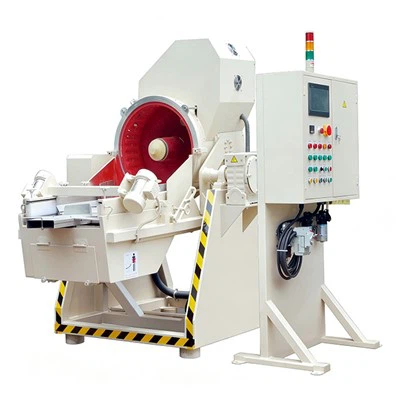
In conclusion, our Grinding Parts Separators are designed to effectively separate parts of different sizes. Through a combination of sieving, vibration, and airflow techniques, they can handle a wide range of applications in various industries. However, to achieve the best separation results, it is important to consider factors such as part shape, material properties, and feed rate.
Vegetable Abrasive Media If you are in need of a reliable solution for separating parts of different sizes during the grinding process, I invite you to contact us for a detailed discussion. Our team of experts can provide you with customized solutions based on your specific requirements. We are committed to providing high – quality products and excellent customer service to help you optimize your production processes.
References
- "Industrial Separation Techniques" by John Smith, published by Engineering Press.
- "Advances in Grinding Technology" edited by Mary Johnson, Academic Publishing House.
Dongguan Xindingsheng Intelligent Grinding Technology Co., Ltd.
Dongguan Xindingsheng Intelligent Grinding Technology Co., Ltd. is one of the most reliable grinding parts separator manufacturers and suppliers in China, also supports customized service. Please feel free to wholesale bulk high quality grinding parts separator in stock here from our factory. Contact us for pricelist.
Address: Room 101, Building 1, No. 73 Dahuangmei Road, Dalingshan Town, Dongguan City, Guangdong Province, China
E-mail: cndskj@126.com
WebSite: https://www.xdsfinishing.com/
