If you’ve ever run your hand across a polished hardwood countertop, traced the swirls on a custom cabinet door, or stared at the intricate grain of a feature wall, you’ve been looking at wood veneer. As a third-generation wood veneer supplier, I’ve spent 18 years in this business, and the question I hear most from architects, cabinetmakers, and interior designers isn’t just “is this veneer real?”—it’s “how did they get that pattern?” The answer boils down to one thing: how we cut the log. It’s not just a technical step for us; it’s the thing that turns a plain log into a design element that makes a space feel intentional. Let me break it down, because this isn’t just woodworking jargon—it’s the difference between a feature that works for your project and one that falls flat. Wood Veneer

First, let’s ground this in a quick basic. Veneer is a thin slice of wood (usually 0.6mm to 3mm thick, depending on the use) sliced from a log. The way we slice that log determines every visible characteristic: grain direction, pattern, symmetry, figure, even how the wood reacts to light. I’ve seen projects where a $10,000 custom kitchen was ruined because the wrong cut was chosen, and others where a simple guest bathroom elevated to a showpiece just because the right cut made the grain sing. Let’s start with the most common cuts, because those are the ones that make up 90% of what we supply.
Flat cut, also called plain sliced, is the workhorse of the veneer industry. Here’s how it’s done: we mount the log on a lathe, then run a long knife straight through the log, parallel to its annual growth rings. The key here is that the knife never stays perfectly parallel—for every log, we angle it slightly to hit the growth rings at roughly a 30-degree angle. The result is that iconic wavy, undulating grain that looks like flowing water or waves. Flat cut is the go-to for oak, maple, and cherry, and it’s beloved by designers because the pattern is consistent enough for large surfaces like floors or cabinetry, but varied enough to add warmth without being distracting. But here’s the thing most people don’t realize about flat cut: the angle of the knife changes the pattern. If we angle the knife steeper, the waves get tighter; shallower, and they stretch out longer. I had a customer last year who was designing a modern restaurant and wanted a dramatic, wave-like feature wall in walnut—too steep an angle would have looked busy, too shallow would have felt flat. We ran three test slices, sent photos of each in different lighting, and landed on a medium angle that worked perfectly. Flat cut does have one downside, though: it’s prone to “cathedral grain,” that iconic V-shape at the edge of each slice. That’s not a defect—it’s a natural part of flat cut, and it’s why flat cut is often chosen for classic, traditional spaces. If you want to avoid cathedral grain for a more modern look, we move to the next cut.
Quarter cut, also called rift cut, is the one that eliminates those V-shapes and gives you straight, vertical grain with small, tight flecks. Here’s how it’s done: before we slice, we split the log into four quarters first. Each quarter is then mounted on the lathe with the growth rings at a 60 to 90-degree angle to the knife. Because we’re slicing perpendicular to the growth rings, the grain runs straight, almost linear, along the length of the veneer. Quarter cut is the go-to for oak for professional grade applications, especially for cabinetry where straight grain is preferred for a sleek, uniform look. It’s also popular for white oak and ash for flooring, because the straight grain is more resistant to wear and less likely to show scuffs than flat cut’s undulating grain. I had a high-end residential client two years ago who was renovating a 1920s home and wanted custom built-ins that matched the home’s original straight grain woodwork. Flat cut would have been too busy, quarter cut gave us exactly the linear pattern he needed, and when we finished, he told us it felt like the house had been built that day. Quarter cut has another unique feature: on woods like white oak, it produces “ray flecks,” those small, silver or tan streaks that run perpendicular to the grain. Those flecks are extra prominent in quarter cut, because we’re cutting right across the medullary rays, the part of the tree that transports nutrients. If you want a decorative, almost speckled look, quarter cut is perfect. But what if you want something more dramatic, something that feels almost like art? That’s where crown cut comes in.
Crown cut, also called rotary cut or rotary sliced, is the cut that creates that iconic circular, mirror-image pattern. Here’s the process: instead of mounting the log and running the knife straight, we mount it on a lathe and spin it, like a roll of paper, while the knife slices off a continuous strip. The pattern is a full slice that’s symmetrical, like a half-circle or a semicircle, hence the “crown” name. Crown cut is most famous for walnut, maple, and bird’s eye maple, where the pattern can be bold and dramatic. The big advantage of crown cut is that the grain is consistent across the entire sheet, so you can line up multiple sheets to create a continuous, symmetrical pattern that wraps around a room or a piece of furniture. I supplied crown cut walnut for a luxury hotel lobby last year: we cut 120 sheets, all aligned so the semicircle patterns lined up, creating a wall that looked like it flowed without any breaks. The designer told me that was the most memorable part of the space for guests. But crown cut isn’t without tradeoffs: because we’re spinning the log, the grain is slightly less dense than flat or quarter cut, so it’s not ideal for high-wear applications like flooring. It also tends to have more “runout,” where the grain changes direction slightly across the sheet, so it’s best used for feature walls or furniture where appearance is the top priority. There’s another type of crown cut called “quarter sawn crown” but that’s a more specialized cut, usually used for very large logs where we want an even more dramatic symmetrical pattern.
Wait, let’s not forget about another specialized cut: rift cut, though that’s often confused with quarter cut. Rift cut is when we slice the log at a very steep angle, usually between 30 and 60 degrees, to get almost perfectly straight grain, and it’s most commonly used for red oak. The difference between quarter cut and rift cut is subtle, but for manufacturers that need very uniform grain for things like window blinds or millwork, rift cut is the choice. It’s less likely to have ray flecks than quarter cut, so the pattern is more consistently straight. I’ve supplied rift cut red oak for window casings for a new apartment building downtown—each casing needed to look identical, and rift cut gave us the perfect uniform straight grain that didn’t vary from sheet to sheet.
Now, here’s where things get interesting: not all cuts are created equal when it comes to color and figure. For example, when we cut a log, the outermost part (the sapwood) is lighter, and the heartwood (the inner part) is darker. The cut determines how that color gradient appears. Flat cut, because it cuts across the log at a shallow angle, can have a color gradient that runs along the length of the veneer, while quarter cut has a more uniform color, since it’s cutting through a more consistent part of the log. Crown cut can have a color gradient in the shape of the semicircle, with one end lighter and one end darker, which is part of the pattern. That’s not a defect—it’s a feature, and we’ll often sort veneer by color when we supply it, so we can create sequences where the color flows naturally.
Lighting also plays a huge role in how the cut looks. Flat cut’s wavy grain catches light differently, creating subtle shadows that make the pattern look more dynamic in low light, while quarter cut’s straight grain is more uniform under bright artificial light, which is why it’s so popular for office spaces where lighting is constant. I always advise my clients to look at veneer samples in their space’s actual lighting, not just under store lights. A cut that looks perfect in a showroom can look washed out in a room with north-facing windows, or too busy under harsh overhead lights. I once had a designer who ordered flat cut maple for a office break room, and when it was installed, the wavy grain was so busy it made people feel nauseous. We swapped it for quarter cut maple, and it worked perfectly in two days—something I always remind clients of when they’re choosing a cut.
Another factor I’ve learned over the years is log diameter. Large, mature logs produce better veneer for specialized cuts like crown cut, because they have more consistent grain patterns. Smaller logs, from younger trees, are better for flat or rift cut, since they don’t have the depth of pattern needed for crown cut. As a supplier, I work with foresters who harvest logs sustainably, and we only use logs that are the right size for the cut the client needs. I’ve turned down orders for crown cut from small oak logs before, because the pattern would be weak, and I’d rather supply a product that meets the client’s expectations than cut a log that would result in a subpar veneer. This is why many suppliers won’t do custom cuts for small orders—specialized cuts require specific logs, and they have higher waste rates, since we test multiple slices to get the pattern right.
Waste is another part of the story I don’t talk about enough. When we cut a log, the amount of usable veneer depends on the cut. Flat cut has the highest yield, around 60% of the log can be turned into usable veneer, while crown cut has a lower yield, around 40%, because we have to trim the edges of each sheet to get the symmetrical pattern. That’s why specialized cuts are more expensive, but for good reason—we’re working with less log to get the same amount of veneer, and we have more waste. That’s why I always explain to clients that price isn’t just for the wood—it’s for the skill of cutting it, and the care that goes into matching the pattern.
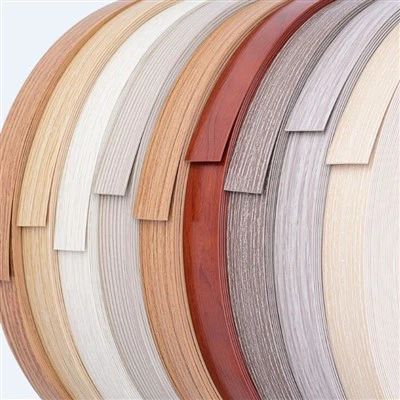
I’ve had designers come to me asking for the cheapest veneer for a large project, only to realize that a lower cost cut would mean more defects or a pattern that doesn’t align. I’ll show them sample sheets of different cuts, and explain the tradeoffs: “This flat cut walnut is $2 a square foot less, but it has cathedral grain that might not work for your modern kitchen. This quarter cut is $1.50 more, but it has straight grain that will look uniform across the entire cabinetry.” Over the years, I’ve built relationships with architects and interior designers who trust me to give them honest advice, not just sell them the most expensive product. That’s what being a veneer supplier is about—we’re not just selling wood, we’re helping people design spaces that feel like theirs.
Furniture Board As you start planning your next project—whether it’s a kitchen remodel, a feature wall, or custom furniture, the cut of the veneer is one of the most important decisions you’ll make. It’s not just a technical detail; it’s the thing that will make your space stand out, feel cohesive, and have a unique character that can’t be replicated with solid wood. The right cut can turn a simple material into a statement piece, while the wrong cut can ruin even the best design. If you’re not sure which cut is right for your project, or if you have questions about how different cuts will look in your space, don’t hesitate to reach out to discuss your needs and see samples that fit your vision.
References
- Forest Products Laboratory. (2010). Wood Handbook: Wood as an Engineering Material. U.S. Department of Agriculture, Forest Service.
- Breyer, D. E. (2005). Design of Wood Structures. McGraw-Hill Education.
- Simpson, R. D. (1999). Veneer and Plywood Manufacturing. Forest Products Society.
- Ciesielski, S. K. (2002). Wood Design and Performance. CRC Press.
- White, R. H. (2015). Sustainable Wood Products for Construction. Wiley-Blackwell.
Yongkang City Dashu Decorative Materials Co., Ltd.
As one of the most professional wood veneer manufacturers and suppliers in China, we have world-leading production equipment and strong manufacturing capabilities. Please rest assured to buy bulk customized wood veneer at low price from our factory.
Address: No. 1199, Huajie West Avenue, Huajie Town, Yongkang City
E-mail: m13506791251@163.com
WebSite: https://www.dashutrim.com/
