If you’ve ever stood in front of a server rack, a commercial HVAC unit, or a custom electronics enclosure and wondered why one fan cools like a champ while another dies in a week, you’re not alone. When I first started working with EC fan tech, I thought “just pick the biggest one” would work. Spoiler: it didn’t. I burned out three prototype setups before I learned the hard way that choosing the right EC fan for your application isn’t about grabbing whatever’s cheapest or loudest—it’s about matching specs to what your project actually needs. And since we’re a supplier that’s worked with everyone from small lab teams to industrial design firms, I’m gonna break down how I’ve helped hundreds of folks nail this without the guesswork. EC Fan
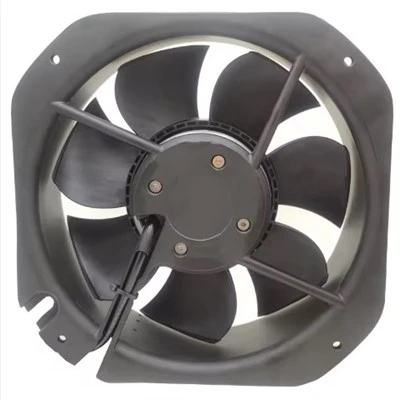
First off, let’s cut the jargon a little: EC fans (or electronically commutated fans, if you’re fancy) aren’t your old AC fans that run on brute force. They’re way more efficient—like, 30-50% less energy use kind of efficient—because they control speed digitally instead of using that clunky, energy-wasting AC motor. But that efficiency doesn’t matter if you pick the wrong size or set it to spin too fast. So here’s the first thing to figure out for your specific setup: what’s the actual airflow you need? That’s not just “I need air to move.” Let’s make it concrete. If you’re cooling a server rack, that’s usually measured in CFM (cubic feet per minute)—the amount of air that needs to move through the space every minute. A typical 1U server needs like 100-150 CFM, but if you’ve got a full rack with 4 servers, that’s 400-600 CFM minimum. Get this number wrong, and your gear overheats. Get it too high, and you’re wasting money on electricity and making unnecessary noise.
Wait, but don’t just go straight for a fan with a CFM number that matches. There’s a catch: CFM is tested at “free air”—meaning no obstacles in the way. If your fan’s gonna be mounted behind a grille, or next to a heat sink, or in a duct, that CFM drops. That’s called static pressure. Static pressure is the force the fan has to push against to move air through obstructions. So if you’re working with a setup that’s got a lot of blockage (like a HVAC unit with a filter and coils), you need a fan with high static pressure, not just high CFM. I’ve seen this go wrong so many times: a design engineer grabbed a 100 CFM low-static fan for a duct system, and it moved like 30 CFM once it was installed. Total waste. The rule of thumb here is: if your setup has more than a small grille, prioritize static pressure over free-air CFM.
Next, noise. A lot of folks sleep on this, but if you’re putting your fan in a lab where researchers are doing sensitive tests, or an office cabinet that’s near a work area, a loud fan can be a problem. EC fans are quieter than AC fans at the same airflow, but that doesn’t mean they’re silent. Noise is measured in decibels (dB), and the sweet spot for most non-industrial apps is under 50 dB—about as loud as a normal conversation. Industrial apps can handle more, but you still don’t want a fan that’s gonna be a nuisance. Pro tip: don’t just look at the max dB rating. Fans are quieter when they run slower, and EC fans let you adjust speed easily. So if you can get a fan that’s rated for the airflow you need at a lower speed, that’s your ticket to less noise.
Then there’s power. EC fans run on less electricity than AC, but the power rating still matters. If you’re running the fan off a battery (like in a portable cooling unit), you need to make sure the fan’s power draw matches your battery’s capacity. If it’s plugged in, the energy savings over time will make the right fan worth it, but if you pick a fan that’s way too big, you’re paying for energy you don’t need. Another thing: most EC fans have variable speed controls, which let you adjust airflow based on how hot your equipment is. That’s a huge perk—you don’t have the fan at full blast 24/7, you only crank it up when it’s needed. That saves even more power and extends the fan’s life.
Now, let’s talk about durability, because fans that die early are a headache. EC fans have different bearing types: sleeve, ball, and hybrid. Sleeve bearings are cheap, good for low-vibration, low-duty apps (like a small cabinet that runs 8 hours a day). Ball bearings are tougher, better for industrial apps that run 24/7, or places that have a lot of vibration (like a machine shop). Hybrid bearings are a middle ground. Also, check the operating temperature range. If you’re putting a fan in a outdoor HVAC unit or a lab with cold storage, you need a fan that can handle the extreme temps—most standard EC fans max out around 50°C, but we make ones that go up to 70°C or down to -40°C for specific apps. I once had a customer who tried to use a standard office fan in a freezer storage unit; it died in 2 weeks because the grease froze. Oops.
Another big one: size and mounting. This sounds obvious, but I’ve had customers tell me “I need a 120mm fan” only to realize their mounting holes were in a weird spot, or the space was too small. Fans come in standard sizes (80mm, 92mm, 120mm, 140mm are the most common for small to medium apps) but custom sizes exist too. Don’t just measure the face of the fan—measure the depth too. If your enclosure is shallow, a deep fan won’t fit. We get that a lot, so we have slim EC fans for tight spaces. Also, mounting holes matter: some fans use four corner holes, others use snap-in mounts for easy installation. If you’re retrofitting an old setup, snap-in is way easier than drilling new holes.
Wait, let’s make this specific with a couple real-world examples I’ve dealt with, to make it less abstract. First example: a small biotech lab that needed to cool a tabletop PCR machine. They were using an old AC fan that was too loud and only lasted 6 months. We calculated they needed 80 CFM airflow, low static pressure (since it’s just a small enclosure), low noise (under 45 dB), and sleeve bearings (since it runs 12 hours a day, no vibration). We gave them a 120mm EC fan, adjustable speed, energy use dropped 40%, and it’s been running for 2 years no issues.
Second example: an industrial drying oven manufacturer. They needed a fan that could move 500 CFM through ducts with coils (high static pressure), run 24/7 at 60°C, and handle vibration from the oven’s motors. We matched them with a 140mm EC fan with ball bearings, high static pressure, and a sealed motor to keep out dust and lint. It’s been in 20 ovens now, no failures. That’s the difference between matching specs and guessing.
A couple quick mistakes to avoid, from years of dealing with customers. First, don’t overlook humidity. If your fan is going in a humid space (like a greenhouse or a food processing unit), you need a fan with a moisture-resistant coating to keep the motor from rusting. Second, don’t buy based solely on price. The cheap EC fan might save you $10 now, but if it dies in 3 months, that’s more cost than a slightly more expensive one that lasts 5 years. Third, don’t forget about EMC (electromagnetic compatibility). For electronic apps, especially medical or aerospace, you need a fan that doesn’t generate extra EMI that can interfere with sensitive equipment. Most modern EC fans are EMC-compliant, but it’s worth double-checking if your app requires it.
At the end of the day, choosing the right EC fan isn’t about memorizing specs—it’s about asking the right questions. How much air do I need to move? Are there obstructions that will slow it down? How loud is too loud for my space? Where will this fan live, and what conditions will it see? Once you answer those, the rest is just matching to a fan that checks those boxes. We’ve got a range of EC fans for every app, from small tabletop setups to heavy industrial gear, and we’re always here to walk through it with you. If you’re not sure exactly what you need, just reach out—we’ll ask you the right questions to make sure you get a fan that works, not just one that looks good.
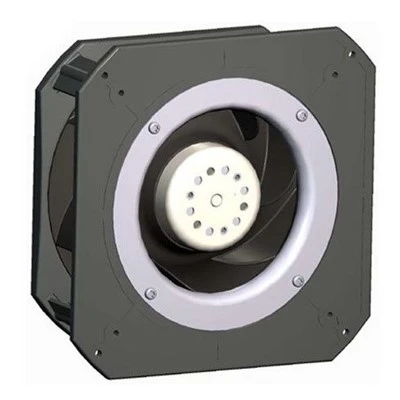
Now, if you’re ready to grab an EC fan that fits your project best, or just want to chat through what works for your specific setup, hit us up to talk through your needs. We’re here to make this part easy, no jargon, no guesswork.
Industrial Cooling Fan References
- Air Movement and Control Association International (AMCA). (2021). Fan Application Handbook: Selection, Installation, and Maintenance.
- Electronic Industries Alliance (EIA). (2019). Standard for EC Motor and Fan Efficiency Ratings.
- Industrial Heating Society. (2020). Selection Guidelines for High-Static-Pressure Fans for HVAC and Industrial Processes.
- University of California, Berkeley. (2018). Noise Control Guidelines for Laboratory Equipment.
Dongguan Shengzhirong Electronics Co., Ltd.
As one of the most professional ec fan manufacturers and suppliers in China, our products have good reputation in the market. Please rest assured to wholesale high quality ec fan made in China here from our factory. Customized orders are welcome.
Address: 6/F, Building 2, No.68, Shunxing 2nd Road, Dajingtou 2nd Industrial Zone, Dalang Town, Dongguan City, Guangdong, China
E-mail: szr_coolingfan@163.com
WebSite: https://www.szrfan.com/
