If you’ve ever walked through a bustling corrugated box manufacturing plant, you’ve probably watched as raw paper rolls roll into one end of a machine, and neatly folded, printed boxes emerge on the other. What you might not have noticed is the quiet, interconnected web of equipment humming behind that single corrugated box making machine (CBMM)—and the way these units work together to turn a basic box into a finished, ready-to-ship product. As a CBMM supplier with 12 years in this industry, I get asked this question at least once a week: Can a corrugated box making machine be connected to other equipment? The short answer is yes, and the truth is that modern CBMMs aren’t just standalone machines—they’re the core of an integrated, end-to-end production line that’s reshaping how small and large box makers operate. Today, I want to pull back the curtain on exactly how this integration works, why it matters for your bottom line, and why skipping this connection could leave your business falling behind. Corrugated Box Making Machine
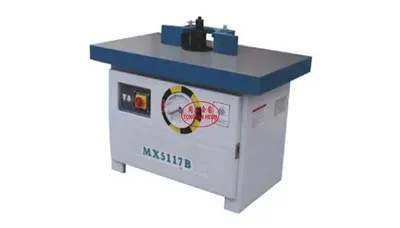
Let’s start with the basics: what a standalone CBMM does, and why connecting it to other equipment is a game-changer. A typical standalone CBMM takes raw linerboard and corrugating medium, runs them through preheaters, glues the layers together to form a corrugated sheet, cuts that sheet to size, scores and slots it to form box blanks, and stacks those blacks for pickup. But when it’s connected to other equipment, that manual, semi-automated process becomes fully streamlined. For example, connecting a CBMM to a digital printing press eliminates the need for a separate printing step, which used to mean moving box blanks from one machine to another, waiting for drying, and risking errors from human handling. I recently worked with a small family-owned box maker in Ohio who was using a standalone CBMM and a separate flexo printer; they had three people dedicated to moving blanks between the two units, and their error rate was around 8%—mostly from misaligned printing or damaged blanks during transport. After we connected their CBMM to a new high-speed digital printer and automated conveyor system, their error rate dropped to under 2%, and they cut that three-person team down to one person overseeing the entire line. That’s the kind of tangible, bottom-line result that makes integration worth investing in.
Now, let’s break down the most common and practical connections we see our clients making, so you can visualize how this works in real production. First, the conveyor link: this is the backbone of any connected line. Instead of forklifts or manual carts moving blanks between machines, motorized, programmable conveyors sync up the speed of your CBMM with every adjacent piece of equipment. These conveyors aren’t just basic belts—they have sensors that adjust speed if a machine slows down, so blanks don’t back up or get damaged. For example, if you connect your CBMM to a die-cutter (the machine that cuts custom shapes into blanks), the conveyor will send corrugated sheets directly from the CBMM’s cutting station to the die-cutter’s feed roller, with no gap between the two processes. We also connect CBMMs to stackers and palletizers that automatically group finished boxes by size, count them, and load them onto pallets—so the line doesn’t stop to wait for a forklift operator. One of our larger clients, a box supplier to major e-commerce brands, has a line that connects a CBMM to a six-color flexo printer, a rotary die-cutter, an in-line folder-gluer, and a robotic palletizer. The entire line runs 22 hours a day, with just two operators on shift, and their output is 30% higher than when they used separate, standalone machines.
Next, connecting your CBMM to software and data systems. This is a less obvious but equally important type of connection. Modern CBMMs have built-in sensors that track every part of the production process: how much linerboard is used, the amount of glue applied, the speed of the corrugating rollers, and even the moisture content of the raw paper. When you connect that machine to a manufacturing execution system (MES) or an enterprise resource planning (ERP) platform, you get real-time data on production rates, waste, and downtime. For example, if your CBMM is running a batch of small shipping boxes and the MES pulls a new order for large moving boxes, the system can automatically adjust the CBMM’s settings (roller gap, glue amount, cutting size) and send that information directly to the machine, no manual input needed. This eliminates human error in setup and cuts down on changeover time—something every box maker struggles with. I had a client who was changing over their standalone CBMM every 45 minutes for different box sizes, because they had to manually adjust 12 different settings each time. After connecting their CBMM to their ERP, that changeover time dropped to 8 minutes, and they were able to take on 20% more custom orders without adding extra shifts. We also often connect CBMMs to quality control scanners: these high-tech cameras scan every box blank as it comes off the line, checking for misaligned printing, incorrect cutting, or weak glue seams, and if a defect is found, the scanner automatically diverts that blank to a reject bin, so it doesn’t move on to the next step. That’s another area where the Ohio family-owned business I mentioned earlier improved—their new QC scanner connected directly to the CBMM, and they now only rework 1% of blanks, compared to 15% before integration.
But here’s the thing I always emphasize to new clients: connecting your CBMM to other equipment isn’t a one-size-fits-all project. You can’t just buy a random conveyor and plug it into any CBMM and expect it to work. That’s why working with a supplier who designs integrated lines from the start is so important. The biggest mistake we see small box makers make is trying to retrofit an old, standalone CBMM with off-the-shelf parts, which often leads to compatibility issues, downtime, and even damage to the machine. For example, we had a client who tried to connect their 10-year-old CBMM to a new digital printer without working with our engineering team; the conveyor they bought was too wide for the CBMM’s output, so blanks got jammed every 10 minutes, and the CBMM’s feed roller was damaged by the inconsistent pressure from the conveyor. We had to come in, adjust the CBMM’s feed system, custom-build a narrow conveyor, and integrate the two machines’ control systems, which ended up costing them twice as much as if they had worked with us from the start. The key is to plan your line around your specific production needs: how many different box sizes do you run? Do you print custom graphics? What’s your monthly output goal? A good CBMM supplier will work with you to map out the right connections, from conveyors to software, that fit your budget and operations, not just the latest tech.
Another common question I get: is it worth connecting a CBMM if I only run small batches of boxes? I hear this a lot from new startups or small businesses that make custom boxes for local retailers. The short answer is yes, even for small batches. Let’s say you run a batch of 50 custom boxes for a local bakery and another batch of 100 shipping boxes for an e-commerce client. If you’re using a standalone CBMM, you have to stop, clean the machine, adjust settings, and maybe move blanks to a separate printer for each batch. If your CBMM is connected to a small, compact digital printer and a automated stacker, you can switch between batches in 10 minutes or less, with no manual handling. The startup I worked with in Atlanta, which only runs batches of 50-200 boxes for local cafes and boutique brands, upgraded from a standalone CBMM to a compact connected line 18 months ago. They now take on twice as many custom orders, because they don’t have to turn down small jobs that would have required too much setup time, and their labor costs are down by 25%. For small operations, integration doesn’t mean building a massive, high-speed line—it means connecting the machines you already use, in a way that cuts down on tedious, error-prone manual work.
I also want to address a concern many of my clients have: downtime. They worry that connecting a CBMM to other equipment means more points of failure, so if one part of the line breaks, the whole line stops. That’s a valid worry, but modern integrated lines are built with redundancy and smart monitoring to minimize that risk. For example, most connected lines have a central control panel that alerts operators to a issue before it causes a full stop—like a low glue reservoir or a jam in the conveyor. Many of our lines also have manual override settings, so if a piece of equipment does go down, operators can disconnect it and run the CBMM in standalone mode, so you don’t lose all production. We also offer ongoing maintenance and support for all our integrated lines, which means if something does go wrong, our team can troubleshoot remotely or send a technician out quickly, so downtime is kept to a minimum. The reality is that standalone machines have just as much risk of unplanned downtime—usually from manual setup errors or human error in handling materials—so integration actually reduces overall downtime by eliminating many of those avoidable issues.
Let’s talk about the long-term benefits too. When you connect your CBMM to other equipment, you’re not just improving your current operations—you’re future-proofing your business. The corrugated box industry is changing fast: e-commerce brands are demanding faster turnaround times and smaller custom batches, retailers are looking for boxes with branded graphics, and sustainability regulations are pushing manufacturers to use less material and reduce waste. An integrated line makes it easier to adapt to these changes. For example, if you decide to add 3D box printing or adopt a new type of linerboard, your connected CBMM can be updated with new software and hardware without replacing the entire machine. A client we worked with in Texas expanded their business from just shipping boxes to custom retail displays two years after installing their connected line. They added a display-cutting machine that integrated with their existing CBMM, and now they can produce full retail displays in-house, instead of outsourcing them to a third party. That new revenue stream wouldn’t have been possible if they’d stuck with a standalone CBMM.
So, if you’re a box maker weighing whether to connect your CBMM to other equipment, here’s my advice: start with your biggest pain points. Is manual handling of blanks slowing you down? Are you missing custom orders because of long changeover times? Is waste from defects cutting into your profits? An integrated line isn’t just about being “high-tech”—it’s about solving those specific problems. As someone who’s installed hundreds of CBMMs and connected lines over the years, I’ve seen businesses of all sizes grow, reduce costs, and take on new opportunities by making the right connections. The worst thing you can do is stay with a standalone machine because you’re worried about the upfront cost or complexity—because in the long run, that will hold your business back.
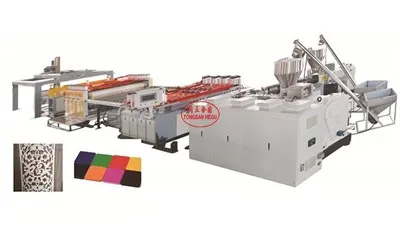
If you’re ready to explore how connecting your corrugated box making machine to other equipment can work for your operations, I’m here to help. We’ll walk through your current setup, your production goals, and design a custom solution that fits your needs and budget—no one-size-fits-all jargon, no pressure to buy something you don’t need. Let’s talk about how to make your box making process faster, more efficient, and more profitable.
Plastic Pipe Machine References
Corrugated Box Manufacturing Industry Report, 2023. Global Corrugated Packaging Association.
Integrated Production Line Efficiency for Corrugated Packaging, 2022. Journal of Packaging Technology and Science.
Small and Medium Box Maker Operational Benchmarks, 2024. National Federation of Independent Business.
Qingdao Tongsanhegu Plastic Machinery Manufacturing Co., Ltd.
With abundant experience, we are one of the most reliable corrugated box making machine manufacturers and suppliers in China. We warmly welcome you to buy durable corrugated box making machine for sale here from our factory. Quality products and reasonable price are available.
Address: West of Xixinzhi Village, Sanlihe District Jiaozhou, Qingdao City, Shandong Province, China
E-mail: info@tongsanhegu.com
WebSite: https://www.tongsanhegumachine.com/
