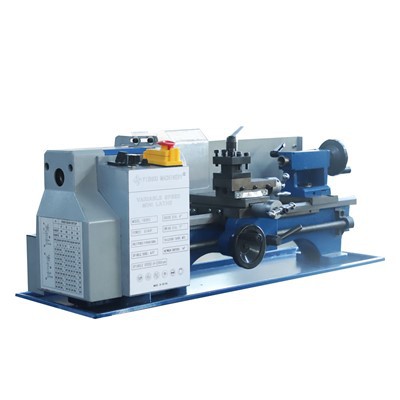
Changing the cutting speed on a benchtop metal lathe is a crucial skill for machinists, whether they are hobbyists or professionals. As a supplier of benchtop metal lathes, I understand the importance of this process and its impact on the quality of the machining work. In this blog, I will guide you through the steps of changing the cutting speed on a benchtop metal lathe, explain the factors to consider, and provide some practical tips. Benchtop Metal Lathe
Understanding Cutting Speed
Cutting speed refers to the rate at which the cutting edge of the tool moves across the surface of the workpiece. It is usually measured in surface feet per minute (SFM) or meters per minute (m/min). The appropriate cutting speed depends on several factors, including the type of material being machined, the type of cutting tool, and the depth of cut.
Material Type
Different materials have different hardness and machinability. For example, soft materials like aluminum can be machined at higher cutting speeds compared to hard materials like stainless steel or titanium. Here is a general guideline for cutting speeds based on material type:
- Aluminum: 300 – 1000 SFM
- Brass: 200 – 800 SFM
- Mild Steel: 100 – 300 SFM
- Stainless Steel: 50 – 150 SFM
- Titanium: 20 – 50 SFM
Cutting Tool
The type of cutting tool also affects the cutting speed. Carbide tools can generally withstand higher cutting speeds than high-speed steel (HSS) tools. Additionally, the geometry of the tool, such as the rake angle and the cutting edge radius, can influence the cutting speed.
Depth of Cut
The depth of cut is the distance that the cutting tool penetrates into the workpiece. A larger depth of cut requires a lower cutting speed to avoid excessive tool wear and poor surface finish.
Steps to Change the Cutting Speed on a Benchtop Metal Lathe
Step 1: Determine the Required Cutting Speed
Before changing the cutting speed, you need to determine the appropriate cutting speed for the material and tool you are using. You can refer to the cutting speed charts provided by tool manufacturers or use online calculators.
Step 2: Identify the Speed Control Mechanism
Benchtop metal lathes typically have two main types of speed control mechanisms: belt-driven and variable speed drives.
Belt-Driven Lathes
Belt-driven lathes use a series of pulleys and belts to change the speed. To change the speed on a belt-driven lathe, follow these steps:
- Turn off the lathe and unplug it from the power source for safety.
- Locate the belt guard and remove it.
- Identify the different pulley sizes on the motor and the spindle. The larger the pulley on the motor and the smaller the pulley on the spindle, the higher the speed.
- Loosen the belt tension by adjusting the motor position or using a tensioner.
- Move the belt to the desired pulley combination.
- Tighten the belt tension and replace the belt guard.
Variable Speed Drives
Variable speed drives (VSDs) allow you to adjust the speed continuously within a certain range. To change the speed on a lathe with a VSD, follow these steps:
- Turn on the lathe and let it warm up for a few minutes.
- Locate the speed control knob or display on the lathe.
- Use the knob or the digital controls to set the desired speed. Some VSDs may require you to enter the speed in RPM (revolutions per minute), while others may allow you to select the speed directly in SFM or m/min.
- Monitor the speed display to ensure that the lathe is running at the correct speed.
Step 3: Calculate the RPM
Once you have determined the cutting speed, you need to calculate the corresponding RPM (revolutions per minute) for the lathe. The formula for calculating RPM is:
RPM = (Cutting Speed x 12) / (π x Diameter of the Workpiece)
where the cutting speed is in SFM, the diameter of the workpiece is in inches, and π is approximately 3.14159.
For example, if you are machining a 1-inch diameter aluminum workpiece at a cutting speed of 500 SFM, the RPM would be:
RPM = (500 x 12) / (3.14159 x 1) ≈ 1910 RPM
Step 4: Set the Lathe to the Calculated RPM
If you are using a belt-driven lathe, you may need to adjust the pulley combination to achieve the desired RPM. If you are using a lathe with a VSD, you can simply set the RPM using the speed control knob or display.
Step 5: Test the Cutting Speed
Before starting the actual machining operation, it is a good idea to test the cutting speed on a scrap piece of material. This will allow you to check the surface finish, tool wear, and chip formation. If the cutting speed is too high, the tool may wear out quickly, and the surface finish may be poor. If the cutting speed is too low, the machining process may be slow, and the chips may be difficult to break.
Factors to Consider When Changing the Cutting Speed
Tool Life
One of the main factors to consider when changing the cutting speed is tool life. A higher cutting speed can increase the productivity, but it also increases the tool wear. Therefore, you need to find a balance between the cutting speed and the tool life. You can use cutting fluids to reduce the friction and heat generated during the machining process, which can help to extend the tool life.
Surface Finish
The cutting speed also affects the surface finish of the workpiece. A higher cutting speed can produce a smoother surface finish, but it may also cause chatter or vibration. Therefore, you need to adjust the cutting speed based on the desired surface finish. You can also use a finer feed rate and a smaller depth of cut to improve the surface finish.
Chip Formation
The cutting speed can also affect the chip formation. A higher cutting speed can produce smaller and more manageable chips, which can help to prevent chip clogging and improve the machining efficiency. However, if the cutting speed is too high, the chips may become too small and difficult to remove from the cutting area. Therefore, you need to adjust the cutting speed based on the type of material and the cutting tool.
Practical Tips for Changing the Cutting Speed
Start with a Lower Speed
If you are unsure about the appropriate cutting speed, it is a good idea to start with a lower speed and gradually increase it until you achieve the desired results. This will help to prevent tool breakage and ensure a good surface finish.
Use a Tachometer
A tachometer is a device that measures the RPM of the lathe spindle. Using a tachometer can help you to accurately set the cutting speed and ensure that the lathe is running at the correct RPM.
Monitor the Tool Wear
Regularly monitor the tool wear during the machining process. If you notice excessive tool wear, you may need to reduce the cutting speed or change the cutting tool.
Keep the Lathe Clean
A clean lathe can help to improve the performance and accuracy of the machining process. Regularly clean the lathe and remove any chips or debris from the cutting area.
Conclusion
Changing the cutting speed on a benchtop metal lathe is an important skill that can significantly affect the quality and efficiency of the machining work. By understanding the factors that affect the cutting speed, following the steps outlined in this blog, and considering the practical tips, you can ensure that you are using the correct cutting speed for your machining operations.
Magnetic Drill Press If you are in the market for a benchtop metal lathe or need more information about changing the cutting speed, please feel free to contact us. Our team of experts is ready to assist you with your purchasing decisions and provide you with the support you need to get the most out of your lathe.
References
- ASM Handbook, Volume 16: Machining. ASM International.
- Machining Data Handbook, 4th Edition. Industrial Press.
- Tooling U-SME. Machining Fundamentals.
YS Machine Tools Co., Ltd.
We’re well-known as one of the leading benchtop metal lathe suppliers in China, featured by quality products and good service. Please rest assured to buy customized benchtop metal lathe at competitive price from our factory. Contact us for more details.
Address: 300 Sandusky st, Ohio, 43611, USA
E-mail: yishoumachinetools@gmail.com
WebSite: https://www.ysmachinetool.com/
